
Measurement results for the Paldiski site 2024
Paldiski former nuclear site was a training centre for nuclear submarines of the USSR Navy in Paldiski during the Estonian SSR. It was one of the largest buildings in Estonia and the largest nuclear facility. Most of the former nuclear facility in Paldiski was demolished by 2007.
Construction of the Paldiski nuclear site
At the beginning of the 1960s, the construction of a land-based training centre for the training of the crews of nuclear submarines of the Soviet fleet started in Paldiski.
The nuclear site in the central part of the Pakri peninsula housed two training facilities, which were part of the submarine housings directly involved in power generation, submarine and reactor control and on-board systems related to their movement. Each of the two demonstrations also included an operating nuclear reactor.
Following the results of a safety assessment carried out after the Chernobyl disaster, both nuclear reactors were temporarily shut down in 1989 with the aim of improving the safety of the reactors, but with the restoration of independence of the Republic of Estonia, the safety upgraded reactors were not restarted. The training at the training centre continued until 1993, but without any practical reactor experience.
Paldiski nuclear facilities
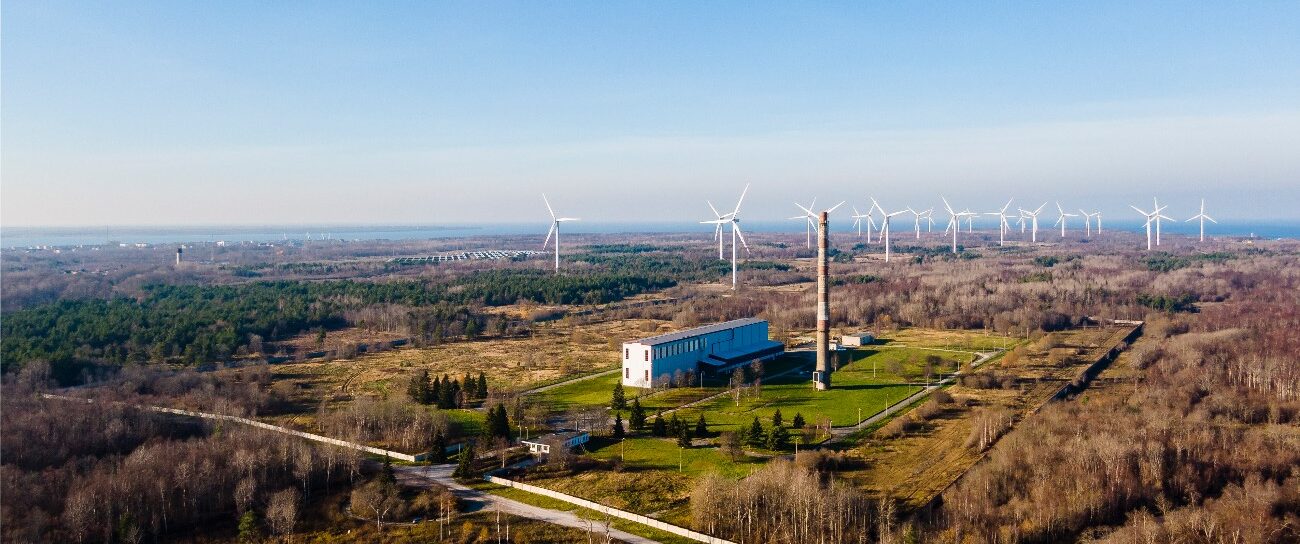
The two reactor-equipped teaching facilities were located in the 200-metre-long main building of the nuclear site. In addition to the main building, the 29 ha site also housed two radioactive waste repositories (solid and liquid), a liquid waste treatment complex, a ventilation centre, a special laundry for washing radioactively contaminated work clothes, a boiler house and many other ancillary facilities necessary for the operation of the nuclear reactors.
Transfer of the Paldiski site to Estonia
After Estonia regained its independence and long negotiations with the Russian Federation, the successor of the Soviet Union, the site was handed over to Estonia on 26 September 1995. Before leaving Paldiski, the Russian Federation, in accordance with the agreement, removed the nuclear fuel from the reactors and dismantled the training facilities, leaving only the two submarine sections containing the nuclear reactor. Reinforced concrete sarcophaguses were built around the latter.
Paldiski object today
Since the take-over of the site, the vast majority of the buildings on the site have been cleaned of radioactive and non-radioactive contamination and demolished. Only three of the 39 buildings and facilities that once stood on the site are still standing:
- a renovated main building containing reactor components, a modern interim storage facility for radioactive waste and office and storage facilities and workshops for the operation of ALARA;
- gateway building;
- garage.
Waste collected during the clean-up of the site has been handled and stored in a way that meets modern stringent safety standards.
In 1997, an interim storage facility for radioactive waste was built in the main building of the former Paldiski nuclear site. The interim storage facility holds waste from the decommissioning of the Paldiski and Tammiku sites, as well as industrial and medical waste. The repository is divided into two compartments, each of which holds 360 waste containers measuring 1,2 × 1,2 × 1,2 m.
Decommissioning of the Paldiski nuclear site
Prior to the handover of the former nuclear site by the Russian Federation, the work carried out in the reactor sections was intended to ensure the safety and stability of the reactors for at least fifty years. However, subsequent studies and assessments show that the storage conditions of the reactors at the former Paldiski site fall far short of internationally accepted safety criteria.
In December 2005, the EU PHARE project 632.03.01 was launched. “Safe long-term storage of the Paldiski sarcophagi and related dismantling activities” design and construction works on the site to ensure the safe storage of reactors and radioactive waste for at least 50 years. This entailed the rebuilding and/or upgrading of the main building and the sarcophaguses and intermediate storage of radioactive waste.
Future outlook for the Paldiski site
Although the vast majority of the decontamination works at the former Paldiski site were completed in 2012, the final dismantling and safety (decommissioning) of the reactor sections will continue until 2040-2050. During the safe storage period of the reactor sections, before the start of the dismantling works, a radioactive waste disposal facility will have to be established in Estonia by 2040, where, in addition to the existing waste, radioactive waste from the dismantling of the reactor sections will be disposed of.